SRN - US News

Trump’s drugmaker deals may save economy $529B over 10 years, White House says

WASHINGTON (AP) — White House economists estimate that President Donald Trump’s deals with pharmaceutical companies to drop some of their U.S. prescription drug prices to what they charge in other countries could save $529 billion over the next 10 years.

The analysis obtained by The Associated Press includes the first economy-wide projections behind a policy at the core of Trump’s pitch to voters going into November’s midterm elections for control of the House and Senate. Democratic lawmakers have been doubtful about the savings claimed by Trump and these new numbers are likely to trigger additional questions about the data.

Cost-of-living issues are at the forefront of voters’ concerns and higher energy prices tied to the Iran war have deepened the public’s anxiety. Trump has tried in part to address affordability concerns by focusing on his efforts to cut deals with companies so that the cost of prescription drugs in the U.S. would no longer be dramatically higher than in other affluent nations.

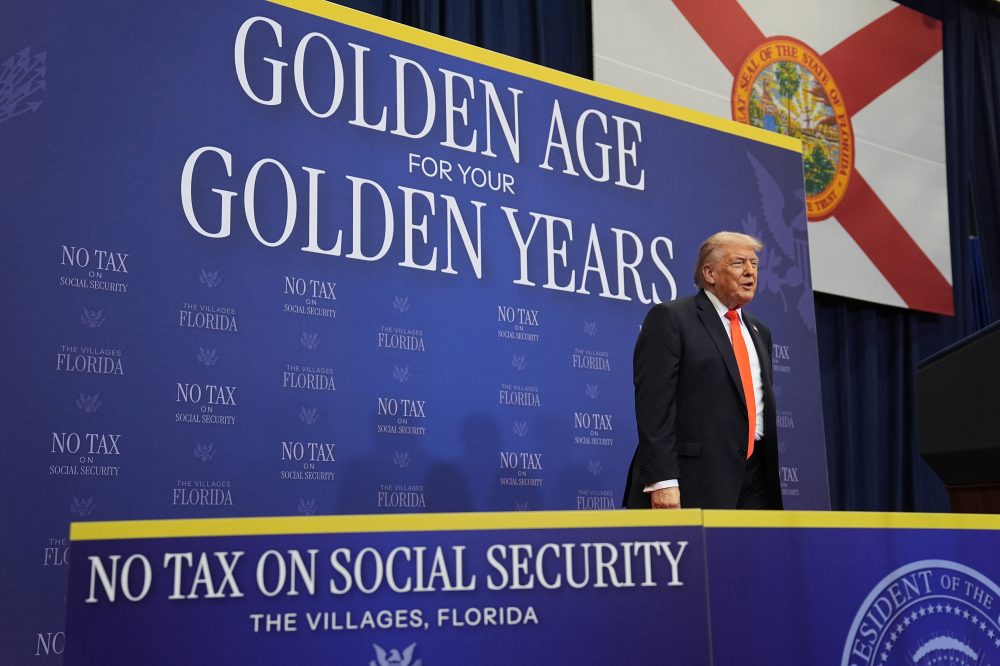
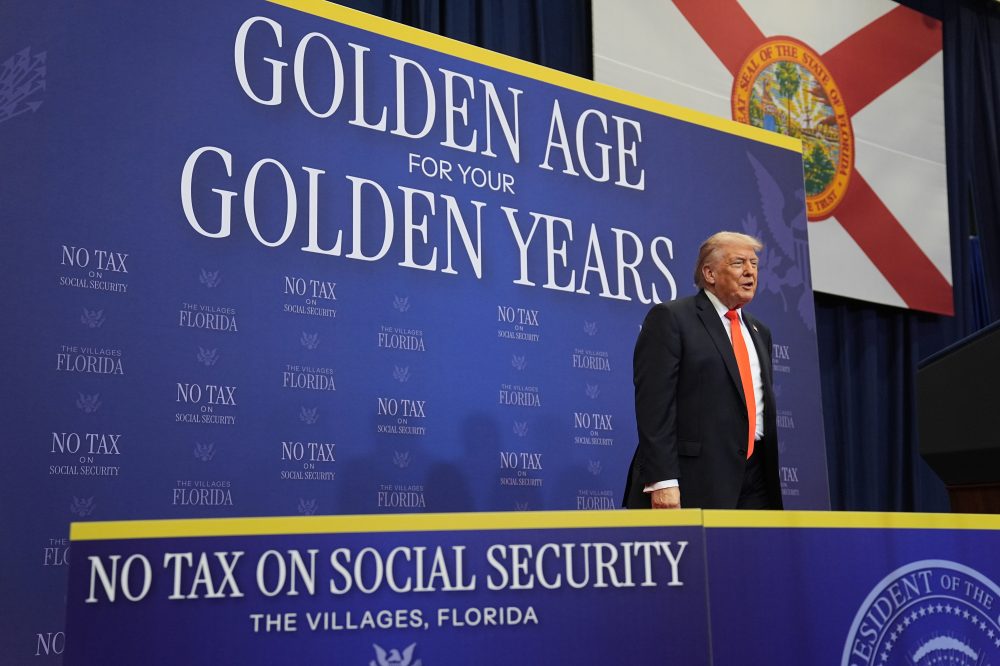
“Now you have the lowest drug prices anywhere in the world,” Trump said at a Friday rally before a crowd of seniors in Florida. “And that alone should win us the midterms.”

The analysis was done by administration officials for the White House Council of Economic Advisers. They also estimated that federal and state governments could save a combined $64.3 billion on Medicaid during the next decade because of what Trump calls his “most favored nation” policy on drug prices.

Few of the details of the deals struck by the Trump administration and 17 leading pharmaceutical companies have been made public, making it hard to independently verify the projected savings. The White House analysis sought to estimate the prospective savings as more medications come onto the market and fall under Trump’s framework — with one model in the report tallying the possible savings at $733 billion over a decade.

Trump and his Department of Health and Human Services have touted his drug-pricing deals as transformative and urged Congress to codify their principles into law. Democratic lawmakers have challenged the administration’s claims of savings. Senate Finance Committee Ranking Member Ron Wyden, D-Ore., and 17 Senate Democrats in April proposed a measure requiring the administration to disclose the terms of the agreements signed by pharmaceutical companies.

“If these deals are so great, why is the Trump administration afraid of showing them to the public?” Wyden said when announcing the measure. Health Secretary Robert F. Kennedy Jr. said his team would share details that didn’t include proprietary information or trade secrets.

The potential savings estimated by the Trump administration would be substantial as Americans spent $467 billion on prescription drugs in 2024, according to the most recent government data available. The analysis is premised on the idea that foreign countries would also pay more for their prescription drugs, which would diversify drugmakers’ sources of revenue and preserve their ability to innovate with new treatments.

The Congressional Budget Office in October 2024 estimated that a plan similar to what Trump ended up adopting could reduce prescription drug prices by more than 5%, though the decrease “would probably diminish over time as manufacturers adjusted to the new policy by altering prices or distribution of drugs in other countries.”

The scope of the savings claimed by the Trump administration are likely to intensify the scrutiny by Democrats, who counter that any price reductions would be offset by higher costs for prescription drugs not covered by the “most favored nation” framework. One of their main critiques is that pharmaceutical companies have increased their profit margins while working with the administration.

In April, staff working for Sen. Bernie Sanders, I-Vt., released an analysis that looked at 15 of the companies that have agreed to this drug-pricing plan and found that their combined profits jumped 66% over the past year to $177 billion. The report noted that the tax cuts Trump signed into law last year “exempted or delayed many of the most expensive drugs” from price negotiations with Medicare.

The Trump administration has countered that they consider Sanders’ critique to be flawed, saying that it’s based on the list prices for pharmaceutical drugs instead the actual price that patients pay.


Brought to you by www.srnnews.com


U.S. job openings were unchanged at 6.9 million in March but hiring improved

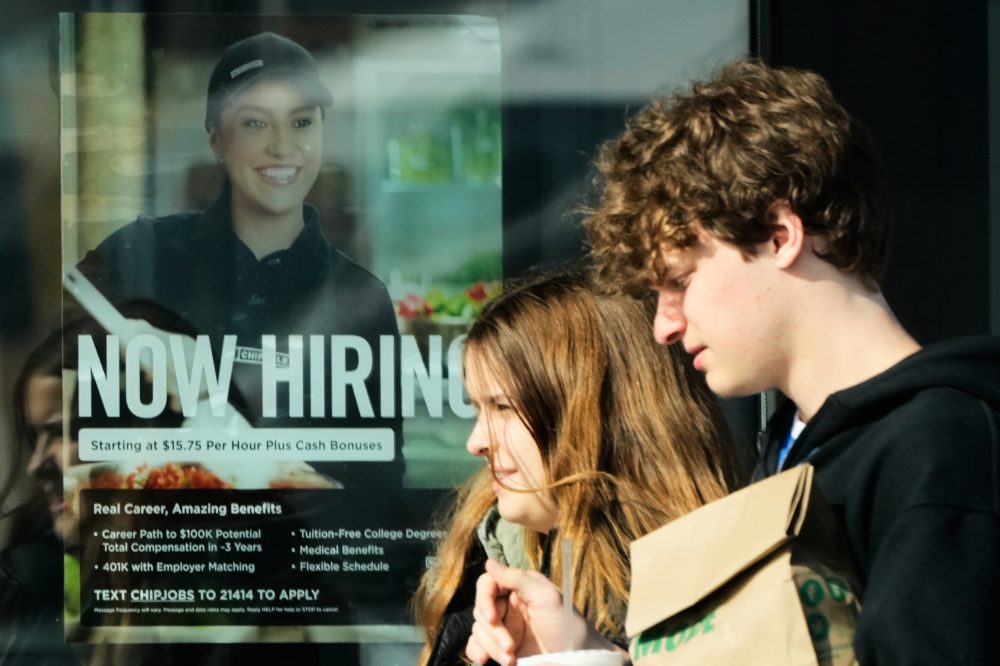
WASHINGTON (AP) — U.S. job openings were essentially unchanged at 6.9 million, another sign the American labor remained sluggish even before the full impact of the Iran war hit the economy.

The job market has been up and down so far this year after a dismal 2025. And the Iran war has clouded the outlook for the economy and hiring.

The Job Openings and Labor Turnover Survey showed that layoffs rose in March. But hiring improved, and more people quit their jobs — a sign of confidence in the economy.

Job openings have come down more or less steadily since peaking at a record 12.3 million in March 2022 as the U.S. economy bounded back from COVID-19 lockdowns. High interest rates, a response to an outburst of inflation in 2021-2022; uncertainty over President Donald Trump’s policies; and, potentially, the disruptive impact of artificial intelligence have discouraged robust hiring.

Last year, employers added fewer than 10,000 jobs a month, weakest hiring outside a recession since 2002. So far in 2026, job creation has bounced around — strong in January (160,000 new jobs) and March (178,000) but weak in February when employers slashed 133,000 jobs.

The Labor Department issues its job report for April on Friday. According to a survey of forecasters by the data firm FactSet, it is expected to show that companies, nonprofits and government agencies added a steady 57,000 net jobs last month and that the unemployment rate remained at a low 4.3%.


Brought to you by www.srnnews.com


Trump’s drugmaker deals may save economy $529B over 10 years, White House says

WASHINGTON (AP) — White House economists estimate that President Donald Trump’s deals with pharmaceutical companies to drop some of their U.S. prescription drug prices to what they charge in other countries could save $529 billion over the next 10 years.

The analysis obtained by The Associated Press includes the first economy-wide projections behind a policy at the core of Trump’s pitch to voters going into November’s midterm elections for control of the House and Senate. Democratic lawmakers have been doubtful about the savings claimed by Trump and these new numbers are likely to trigger additional questions about the data.

Cost-of-living issues are at the forefront of voters’ concerns and higher energy prices tied to the Iran war have deepened the public’s anxiety. Trump has tried in part to address affordability concerns by focusing on his efforts to cut deals with companies so that the cost of prescription drugs in the U.S. would no longer be dramatically higher than in other affluent nations.

“Now you have the lowest drug prices anywhere in the world,” Trump said at a Friday rally before a crowd of seniors in Florida. “And that alone should win us the midterms.”

The analysis was done by administration officials for the White House Council of Economic Advisers. They also estimated that federal and state governments could save a combined $64.3 billion on Medicaid during the next decade because of what Trump calls his “most favored nation” policy on drug prices.

Few of the details of the deals struck by the Trump administration and 17 leading pharmaceutical companies have been made public, making it hard to independently verify the projected savings. The White House analysis sought to estimate the prospective savings as more medications come onto the market and fall under Trump’s framework — with one model in the report tallying the possible savings at $733 billion over a decade.

Trump and his Department of Health and Human Services have touted his drug-pricing deals as transformative and urged Congress to codify their principles into law. Democratic lawmakers have challenged the administration’s claims of savings. Senate Finance Committee Ranking Member Ron Wyden, D-Ore., and 17 Senate Democrats in April proposed a measure requiring the administration to disclose the terms of the agreements signed by pharmaceutical companies.

“If these deals are so great, why is the Trump administration afraid of showing them to the public?” Wyden said when announcing the measure. Health Secretary Robert F. Kennedy Jr. said his team would share details that didn’t include proprietary information or trade secrets.

The potential savings estimated by the Trump administration would be substantial as Americans spent $467 billion on prescription drugs in 2024, according to the most recent government data available. The analysis is premised on the idea that foreign countries would also pay more for their prescription drugs, which would diversify drugmakers’ sources of revenue and preserve their ability to innovate with new treatments.

The Congressional Budget Office in October 2024 estimated that a plan similar to what Trump ended up adopting could reduce prescription drug prices by more than 5%, though the decrease “would probably diminish over time as manufacturers adjusted to the new policy by altering prices or distribution of drugs in other countries.”

The scope of the savings claimed by the Trump administration are likely to intensify the scrutiny by Democrats, who counter that any price reductions would be offset by higher costs for prescription drugs not covered by the “most favored nation” framework. One of their main critiques is that pharmaceutical companies have increased their profit margins while working with the administration.

In April, staff working for Sen. Bernie Sanders, I-Vt., released an analysis that looked at 15 of the companies that have agreed to this drug-pricing plan and found that their combined profits jumped 66% over the past year to $177 billion. The report noted that the tax cuts Trump signed into law last year “exempted or delayed many of the most expensive drugs” from price negotiations with Medicare.

The Trump administration has countered that they consider Sanders’ critique to be flawed, saying that it’s based on the list prices for pharmaceutical drugs instead the actual price that patients pay.


Brought to you by www.srnnews.com


Justice Department seeks the names of 2020 election workers in Georgia’s Fulton County

ATLANTA (AP) — The Department of Justice is seeking the names of every person who worked in the 2020 election in Georgia’s Fulton County, a Democratic stronghold that Donald Trump has long accused of widespread voter fraud he says cost him victory against Joe Biden in the state that year.

Lawyers for the county filed a motion on Monday night to quash a grand jury subpoena that asks for the names and contact information of county employees and volunteer poll workers. This latest action comes after the FBI in January went to a Fulton County elections warehouse and seized ballots and other documents from the 2020 election, which Georgia’s certified totals showed Trump lost in the state to Biden by 11,779 votes out of nearly 5 million cast. Trump still insists the 2020 election was stolen from him even though judges and his own attorney general concluded otherwise.

Monday’s court filing says the subpoena is meant to “target, harass and punish the President’s perceived political opponents.” The request is “grossly overbroad and untethered to any reasonable need,” the county’s lawyers argue.

The January seizure of the ballots and other records from Fulton County was the first in a string of moves by Trump’s Republican administration to obtain past election records from critical swing states. The FBI in March used a subpoena to get records related to an audit of the 2020 presidential election in Maricopa County in Arizona. And the Justice Department in April demanded that Michigan’s Wayne County turn over its ballots from the 2024 election, which Trump won against Biden’s vice president, Kamala Harris.

The Justice Department is also fighting numerous states in court for access to voter data that includes sensitive personal information. Election officials, including some Republicans, have said handing over the information would violate state and federal privacy laws.


Brought to you by www.srnnews.com


Mina Kimes takes over as Scripps National Spelling Bee host as part of reimagined broadcast

Mina Kimes is taking over as television host of the Scripps National Spelling Bee, and the ESPN NFL analyst hopes to use her outsider’s perspective to capture the excitement of the 101-year-old competition.

Kimes, whose hiring was announced Tuesday, becomes the first celebrity host for the bee since LeVar Burton in 2022. That was the year Scripps took over the broadcast from ESPN, its longtime TV home, and began airing it on ION and Bounce, both of which are owned by the Cincinnati-based media company.

Scripps has also brought in a new production team for the broadcast, led by Michael Davies — currently the executive producer of “Jeopardy!” — as it seeks to reverse a decline in ratings.

This year’s bee runs from May 26-28 at a new venue, Constitution Hall in downtown Washington, with 247 spellers competing for a trophy and more than $50,000 in cash and prizes.

“My goal in this is to give it the big-game feel,” Kimes told The Associated Press in an interview ahead of the announcement. “Any event that requires skill and knowledge and preparation can have that feel if it’s presented with enough care and pride on television.”

Davies, whose credits also include “Who Wants to Be a Millionaire,” “Reading Rainbow” and “Good Morning Football,” shares Kimes’ appreciation for the bee, and he told AP his goal is to “make it bigger and make it more famous.”

“We really need to focus the entire broadcast and everything we’re doing around the stakes of the competition and the incredible winning moment, the winning word that happens at the end of the final,” he said.

A Yale-educated journalist, the 40-year-old Kimes is known for using extensive research and study of game video to explain the strengths and weaknesses of NFL players and coaches. She said her preparation for the bee has been similar.

“It honestly does feel a little bit like watching game tape because I really think these kids are elite competitors, not just in terms of being the best of the best, but you can see all of the work that they so clearly put in,” Kimes said. “The way they get to the right answer is fascinating to me and the more you watch, the more you see the way their brains work. I see a lot of similarities to what I do with football, and I’m so pumped to be a part of this.”

Although she never competed on the national stage, Kimes has a history in spelling, winning bees at the school level in the second, third and fifth grades.

Spellers qualify for the National Spelling Bee by winning regional bees around the country and are eligible to compete through the eighth grade. Even the most gifted kids, many of whom study and train year-round under the tutelage of paid coaches, often get only one or two chances to win the most prestigious spelling competition in the English language before they age out.

Over the last few years, Scripps has relied mostly on former spellers as on-air hosts and commentators. Longtime analyst Paul Loeffler, a sports broadcaster, former speller and the brother of bee executive director Corrie Loeffler, will return in that role.

While Scripps touted bigger potential audiences from its move to ION, which is available in more households than ESPN, ratings have been stagnant and dipped slightly over the past two years, according to Nielsen data. The combined audience for the primetime finals on ION and Bounce was 609,000 in 2022, 641,000 in 2023, 461,000 in 2024 and 488,000 last year.

The bee drew over 1 million viewers on ESPN in 2012. The finals of the last three pre-pandemic bees on ESPN had viewership of 606,000 (2017), 550,000 (2018) and 559,000 (2019).

___

Ben Nuckols has covered the Scripps National Spelling Bee since 2012. Follow him at https://x.com/APBenNuckols


Brought to you by www.srnnews.com


The Latest: Hegseth and Caine say ceasefire between the US and Iran is not over

U.S. forces are pressing ahead Tuesday with an effort to guide commercial ships through the Strait of Hormuz, but so far only two vessels, both of them American-flagged merchant ships, are known to have passed through. Joint Chiefs Chairman Dan Caine said the safety corridor in the key waterway for oil and gas transport involves guided-missile destroyers, more than 100 aircraft and 15,000 service members.

Defense Secretary Pete Hegseth said the forces prefer a peaceful effort to “guide” the more than 22,500 mariners stuck on more than 1,550 vessels out of the Persian Gulf, but are ready if needs change. “This is a temporary mission for us,” Hegseth said. “We expect the world to step up.”

It is unclear what will follow. The U.S. Central Command said Iran earlier launched multiple cruise missiles, drones and small boats at civilian ships under the U.S. military’s protection, and that U.S. helicopters sank six small boats involved in the attacks. It denied Iranian reports that American vessels had been struck. Iran has denounced the American moves as ceasefire violations. Caine said the ceasefire is not over.

Trump Secretary of State Marco Rubio will travel to Rome and Vatican City this week in a bid to ease rising tensions between President Donald Trump and Pope Leo XIV, Trump has lashed out at the pope again, misrepresenting the pontiff’s laments about the Iran war and accusing him of “endangering a lot of Catholics.”

Here is the latest:

U.S. job openings were essentially unchanged at 6.9 million, another sign the American labor remained sluggish even before the full impact of the Iran war hit the economy.

The job market has been up and down so far this year after a dismal 2025. And the Iran war has clouded the outlook for the economy and hiring.

The Job Openings and Labor Turnover Survey showed that layoffs rose in March. But hiring improved, and more people quit their jobs — a sign of confidence in the economy.

White House economists estimate the deals with pharmaceutical companies to drop some U.S. prescription drug prices to what they charge in other countries could save $529 billion over the next 10 years.

The analysis obtained by The Associated Press includes the first economy-wide projections behind a policy at the core of Trump’s pitch to voters going into November’s elections for control of the House and Senate. Democratic lawmakers have doubted Trump’s claims, and these new numbers are likely to trigger additional questions about the data.

Cost-of-living issues are at the forefront of voters’ concerns and higher energy prices tied to the Iran war have deepened the public’s anxiety. Few of the details of the deals struck by the Trump administration and 17 leading pharmaceutical companies have been made public, making it hard to independently verify the projected savings.

The Health Ministry in Beirut said Tuesday that 8,311 people were wounded during the same period.

The latest Israel-Hezbollah war started on March 2, when Hezbollah fired rockets into Israel following the U.S. and Israel’s attacks on Iran.

A ceasefire has been in place since April 17 but both Israel and Hezbollah have been carrying out daily attacks since then.

That’s because Iran still clearly intends to attack ships that try to transit without going through the Iran-approved route near the Iranian coastline, said Torbjorn Soltvedt, principal Middle East analyst at risk intelligence company Verisk Maplecroft.

“This initiative alone isn’t something that looks like it’s going to open the Strait of Hormuz,” he said. Shipping and insurance companies “still have to wait and see how this plays out.”

Taking the northern route involves going through vetting by the Islamic Revolutionary Guard Corps, and payment, in at least some cases. The U.S.-guided “Project Freedom” route goes through territorial waters of Oman to the south.

Reopening the strait “can really only be done through either an agreement between the United States or Iran,” or if the U.S. significantly diminishes Iran’s ability to attack using drones, missiles and small boats, he said.

“I will be speaking with the Iranian president shortly at his request,” Emmanuel Macron said Tuesday.

″France has maintained a consistent position from the start. We call for the cessation of all hostilities, the return to diplomatic negotiations, and respect for all countries in the region,” Macron said. “Tthe only possible option is the reopening of the Strait of Hormuz … and the absence of any tolls or coercive measures.”

“Any unilateral escalation against tankers, container ships, or third countries is a mistake that fuels war and leads to escalation,” Macron said.

After the bombing of nuclear sites last summer, Hegseth says U.S. forces participated in new strikes this year alongside Israel because the Iranians’ “will was still there to seek a nuclear bomb.”

The secretary was asked about intelligence reports showing that, despite the initial bombing in Operation Midnight Hammer, the timeline for Iranian nuclear weapon development remained at 9 to 12 months.

“The obliteration of those facilities set back their program,” Hegseth said. “Hopefully Iran chooses a deal that they give up those ambitions, give up those capabilities.”

The defense secretary confirmed that the ceasefire remains in effect despite some Iran strikes and the ongoing U.S. blockade.

“No, the ceasefire is not over,” Hegseth said, reaffirming Caine’s earlier statements.

Saying that more than 100 U.S. military aircraft are patrolling the skies “24 hours a day,” Gen. Dan Caine said Tuesday marked a “quieter” period in the Strait.

Caine added that there were 22,500 mariners on more than 1,550 vessels in the Persian Gulf, unable to transit.

He went on to commend the troops of the 82nd Airborne Division, who he said were using “next generation tactical networks” to “seamlessly synchronize” efforts in support of military activity.

Dan Caine told reporters at the Pentagon on Tuesday that Iran’s recent acts of aggression are below the threshold of “major combat operations.”

That means Tehran, in the Trump administration’s view, has not violated the tenuous ceasefire between the U.S. and Iran.

“Since the ceasefire was announced, Iran has fired at commercial vessels nine times and seized two container ships, and they’ve attacked U.S. forces more than 10 times – all below the threshold of restarting major combat operations at this point,” Caine said.

The administration has cited the ceasefire in asserting that the president does not have to give a formal update to Congress on the war under the War Powers Resolution. That law typically requires presidential updates on war activities 60 days after beginning military action.

Pete Hegseth said in a Pentagon briefing Tuesday that U.S. military forces would prefer the new effort to “guide” stranded ships through the Strait of Hormuz to be peaceful — but are ready if needs change.

“This is a temporary mission for us,” Hegseth said, adding that the intent remains to hand control of the strait back to countries that need the waterway “a lot more than we do. … We expect the world to step up.”

Iran has denounced the move as a ceasefire violation.

Trump is renewing his criticism of Pope Leo XIV even as Rubio prepares to visit Vatican City, ostensibly to ease tensions between Washington and the Holy See.

The president misrepresented the pontiff’s laments about the Iran war in an interview with conservative commentator Hugh Hewitt, while saying Leo is aiding Tehran and making the world less safe.

“The pope would rather talk about the fact that it’s OK for Iran to have a nuclear weapon,” Trump said. “And I don’t think that’s very good. I think he’s endangering a lot of Catholics and a lot of people.”

Leo has not said Iran should obtain nuclear weapons. He’s called for more peace talks, criticized war generally and lambasted Trump’s specific threats of mass civilian strikes.

The pope also has emphasized that he’s reflecting biblical and church teachings, not speaking as a political rival to Trump.

Pope Leo XIV holds his weekly general audience in St. Peter’s Square at The Vatican, Wednesday, Wednesday, April 29, 2026. (AP Photo/Alessandra Tarantino)

Secretary of State Marco Rubio will travel to Rome and Vatican City this week in a bid to ease rising tensions between Trump and Pope Leo XIV over U.S. policies, particularly the Iran war.

The State Department said Monday that Rubio, a Catholic who with this trip will have visited Italy or the Vatican at least three times as the Republican president’s top diplomat, would be in Italy on Thursday and Friday. The Vatican announced that Rubio would meet with Leo, the first American pontiff, on Thursday.

“Secretary Rubio will meet with Holy See leadership to discuss the situation in the Middle East and mutual interests in the Western Hemisphere,” the department said. “Meetings with Italian counterparts will be focused on shared security interests and strategic alignment.”

The trip comes as Trump has criticized Leo for his stances on the Middle East and elsewhere and as the president has drawn pushback for posting a social media image likening himself to Jesus Christ.

▶ Read more

Iran’s latest proposal for ending the war calls for the U.S. to lift sanctions, end the blockade, withdraw forces from the region and cease all hostilities including Israel’s operations in Lebanon, according to the semiofficial Nour News and Tasnim agencies, which have close ties to Iran’s security apparatus.

Iranian officials over the weekend said they were reviewing the U.S. response. Tehran has claimed its proposal does not include its nuclear program and enriched uranium, long a driving force in tensions with the U.S. and Israel.

Iran wants other issues resolved within 30 days and aims to end the war rather than extend the ceasefire. Trump expressed doubt over the weekend that the proposal would lead to a deal.

The disruption of the waterway has squeezed countries in Europe and Asia that depend on Persian Gulf oil and gas, raising prices far beyond the region.

The U.S., meanwhile, has enforced a naval blockade on Iranian ports since April 13, telling at least 49 commercial ships to turn back, according to its Central Command. It has also warned shipping companies that they could face sanctions if they pay Iran for transit of the strait.

The blockade has deprived Tehran of the oil revenue it needs to shore up its ailing economy. U.S. officials have expressed hope the blockade will force Iran to make concessions in talks on its disputed nuclear program and other longstanding issues.

The United Arab Emirates’ Defense Ministry said its air defenses had engaged 15 missiles and four drones fired by Iran. Authorities in the eastern emirate of Fujairah said one drone sparked a fire at a key oil facility, wounding three Indian nationals. The British military reported two cargo vessels ablaze off the UAE.

Indian Prime Minister Narendra Modi on Tuesday condemned the attacks, calling the targeting of civilians and infrastructure “unacceptable.” On X, Modi said India stands in “firm solidarity” with the UAE, and stressed the need for safe and uninterrupted shipping through the Strait of Hormuz.

Tehran did not confirm or deny the attacks but Iran’s Foreign Minister Abbas Araghchi early Tuesday said on X that both the U.S. and the UAE “should be wary of being dragged back into quagmire.”

Pakistan and Saudi Arabia condemned the strikes against the UAE. The Saudi condemnation came despite increasingly strained relations between it and the UAE.

U.S. President Donald Trump on Sunday warned that Iranian efforts to halt passage through the strait “will, unfortunately, have to be dealt with forcefully.”

He said the U.S. effort, “Project Freedom,” was intended to aid tens of thousands of stranded seafarers on hundreds of ships stuck in the Persian Gulf since the war began.

The U.S.-led Joint Maritime Information Center advised ships on Monday to cross the strait in Oman’s waters, saying it had set up an “enhanced security area.”

Iran has called the new U.S. effort a violation of the fragile ceasefire that has held for more than three weeks.

In a post on X on Tuesday, Qalibaf accused Washington of undermining shipping security in the Strait of Hormuz, and warned that a “new equation” there is taking shape.

He signaled that Iran has yet to fully respond to the U.S. attempt to reopen the waterway, saying: “We know full well that the continuation of the status quo is intolerable for America; while we have not even begun yet.”

His statement did not mention negotiations with the U.S. that are now in the form of passing messages via Pakistan.

The Iran war risked reigniting after the U.S. tried to force open the Strait of Hormuz for commercial shipping, though a ceasefire seemed to be holding Tuesday even after the United Arab Emirates said Iran fired missiles and drones at it.

Iran’s powerful parliamentary speaker and chief negotiator, Mohammad Bagher Qalibaf, accused the U.S. of undermining regional security with the effort to end Iran’s stranglehold on the strait and warned that Tehran will respond.

The U.S. military said two American-flagged merchant ships successfully transited the strait on Monday, the first day of the effort, and that it fired on Iranian forces, sinking six small boats that were targeting vessels.

Disputing Washington’s claim of sinking six boats, an Iranian military commander said two small civilian cargo boats were hit on Monday, killing five civilians, Iran’s state TV reported.

▶ Read more


Brought to you by www.srnnews.com


Trump’s influence tested in Indiana Republican state Senate primaries

Indiana’s primary will test President Donald Trump’s enduring power over the Republican Party as he tries to dislodge state senators who refused to go along with his call to redraw the state’s congressional map.

Twenty-one Republican senators voted against redistricting in December, including eight running for reelection this year. Trump has endorsed primary challengers against seven, and the president’s allies have spent millions of dollars on races that rarely get much attention from Washington.

It’s become a costly and unprecedented intraparty battle that has exacerbated tensions among Republicans ahead of the November midterm elections that will determine control of Congress.

Indiana Lt. Gov. Micah Beckwith said the primary is about how far the party will go to get an edge over Democrats — a contest between “the Republicans who tend to want to avoid the fight and the Republicans who feel like we need to fight.”

“So the only question is, ‘Will you fight or will you get trampled by the other side?’” said Beckwith, who is supporting the Trump-backed challengers.

Trump began leaning on Republican-led states last year to redraw their congressional maps to make it easier for his party to hold its thin majority in the U.S. House. Although redistricting is normally done once a decade, after a new census, Trump wanted to abandon tradition to gain a political edge.

Texas was the first to follow through, and the White House pressured Indiana to go along too. Vice President JD Vance met with state politicians in Washington and Indianapolis, and Trump weighed in by conference call.

However, Indiana senators rebuffed the effort, one of the president’s first significant political defeats of his second term.

The redistricting fight divided Republicans in Indiana, a state Trump won three times by no less than 16 points. Republican Gov. Mike Braun, U.S. Sen. Jim Banks and organizations such as Turning Point Action have worked alongside Trump to unseat the incumbents.

Jim Bopp, a prominent Indiana attorney who leads a political action committee aligned with Braun, predicted that Trump’s support will carry the day for the challengers.

“Republican voters overwhelmingly support Trump, and when they find out Trump has endorsed a particular Senate candidate, they swing their support behind them,” he said.

Opposition to the effort came from anti-Trump Republicans and those wary of the president reaching so deeply into state decision-making. Former Republican Gov. Mitch Daniels, who had stepped away from politics after leaving the governorship in 2015, reemerged to help raise money for targeted incumbents.

The senators who broke with Trump said they were listening to constituents who were overwhelmingly against his redistricting plan. Some said they didn’t like Trump’s aggressive tone in pushing the plan.

“We hate to be told what to do,” said Mike Murphy, a former Republican state representative. “We’re very independent-thinking people. So when Donald Trump and his goons come in and try to tell us that we need to redistrict to help his political future, that’s the worst thing you can do.”

He said Trump and those spending big money to take out the incumbents don’t understand Indiana politics.

“There’s just so many misjudgments on people’s part because they tend to fly at the 50,000-foot level, and they don’t go to the barbecues and the church fish fries and the things that make Indiana politics,” Murphy said.

Bopp, who supports the Trump-backed challengers, said the primary is a chance for Indiana Republicans to express how important it is to redraw the congressional lines there.

“It’s not a matter of Trump’s power,” Bopp said. “It’s about Republican primary voters who support his agenda and don’t want a Democratic House that will be hugely destructive to the Trump presidency and the country.”


Brought to you by www.srnnews.com


USPS unveils Route 66 centennial stamps, born from a photographer’s 42 trips

SPRINGFIELD, Ill. (AP) — You’re standing in the middle of an empty highway, staring off into the fading, golden light of Arizona’s high desert. The soundtrack playing in your mind? Depeche Mode.

Industrial-leaning synth-pop strains might seem incongruous with such a vista, but it was the alternative rock band’s homage to Route 66 that seduced David J. Schwartz. With camera in hand he has made 42 trips over two decades along the celebrated highway, qualifying himself for the job of creating postage stamps commemorating the Mother Road’s centennial.

The U.S. Postal Service on Tuesday is releasing eight stamps marking significant parts of the road in each of the states it traverses, passing by vintage diners, gas stations and motels — many since preserved or restored — along with breathtaking vistas and wide horizons of the open road.

Route 66 is paved with history, from its early days as an escape from the Dust Bowl and the Great Depression, through serving as a vital supply route during World War II, to its mid-century role as an antidote for wanderlust. A symbol of freedom and mobility, it has evolved into a time capsule of Americana, steeped in nostalgia and neon.

As teenagers in 1988, Schwartz and his best friend had planned a road trip after girlfriends introduced them to Depeche Mode, where they discovered a cover of Bobby Troup’s 1946 pop standard, “(Get Your Kicks on) Route 66.” Schwartz’s mother nixed his participation, delaying his first taste of the open road until 2004.

To Schwartz, the road — stretching 2,448 miles (3,940 kilometers) — represents a significant piece of a newly mobile 20th century America, from its debut in 1926 to its decommissioning in 1985: “Road trips, big cars, neon signs.” Though retired from the federal highway system, vast stretches of the route are still in use and a favorite of road warriors and tourists to this day.

“So much to explore. You start here in Illinois on 66 and you’re cruising through prairie land,” Schwartz said during a recent interview in Springfield. “By the time you get out west, you’re in the desert or you’re in mountains through hairpin turns. It’s just an incredible journey and you just get such a beautiful slice of America going through it.”

Tired of retail management, Schwartz went back to school to study photography and had the idea of Route 66 stamps as early as a decade ago. He was tapped for the project in 2023. He recalls thinking, “Here is my moment to bring Route 66 to the masses.”

Greg Breeding, a USPS art director for stamp design, was working on a graphic showing a map of the road when he discovered Schwartz’s photos. They were beautifully photographed, not commercial and slick.

“They’re as if you were there,” he said, “which makes them especially useful for stamps.”

The USPS plate contains 16 stamps, two of each one representing Route 66 host states. A ninth photo serves as selvage, or the image surrounding the block. It’s the scene of that empty Arizona highway, shot in 2023 near Seligman, Arizona, when Schwartz and his high school friend finally took that trip 35 years in the making.

But a road is a road, isn’t it? Why can’t a traveler get the same view standing on one of the interstate highways that ultimately bypassed Route 66?

“You’d probably get run over,” Schwartz said dryly.

“Interstates are designed to move traffic quickly. They cut through the sides of mountains, they do not follow the contour of the land …,” he added. “On Route 66, you’re actually part of the landscape as you move through it. You feel the land as you’re traveling.”

Breeding and Schwartz steered clear of the fabled highway’s most popular spots, not only because those are tougher to get permission to use, but also because they wanted to give people a “fresh look,” Breeding said. The stamps are devoid of people, he said, in part to create a sense of allure rather tourist trap vibes.

To that end, the blocks capture both the continuing commerce and the roadside relics that hint at their former vibrancy. Take for example the Conoco Tower Station and U-Drop Inn in Shamrock, Texas, a neon-adorned Art Deco beauty whose luminous lights come alive at dusk.

In Yucca, Arizona, Schwartz photographed the dilapidated “Motel” sign in the relentless noonday sun, revealing desert desolation but also “the enduring pulse of the open road.”

Among his favorites is the Illinois entry, a friend’s 1929 Model A Ford rumbling down the only remaining section of Route 66 composed of hand-laid brick in Auburn, just south of Springfield. The goal? Create an image that would make viewers feel as if they were there for the birth of Route 66.

“We wanted to show it to be colorful. We wanted to show the quirkiness. We wanted to show the age,” Breeding said. “It’s like a sort of show, the idea that Route 66 is a living history of the United States, from the past to the present.”

Schwartz said he’s amazed that the stamps boasting his work will “travel all over the United States and end up in people’s mailboxes.”

He added: “I hope they really inspire people to get out there and travel the road and support the Mom and Pop businesses and keep Route 66 alive for another 100 years.”


Brought to you by www.srnnews.com

Exclusive-Canada-US oil pipeline close to reaching commitment requirement, sources say

By Arathy Somasekhar and Amanda Stephenson

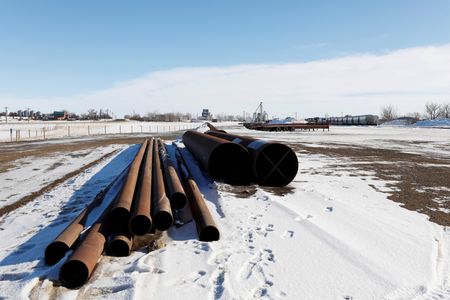
HOUSTON, May 5 (Reuters) – A proposed pipeline for carrying Canadian crude oil to the United States is close to securing the minimum commitments from oil companies that the project needs to go ahead, four sources familiar with the matter told Reuters.

The Alberta-to-Wyoming pipeline, proposed by Canadian pipeline company South Bow Corp and its U.S. partner Bridger Pipeline, could increase Canada’s crude exports to the U.S. by more than 12% if it goes ahead, bringing much-needed pipeline takeaway capacity to Canada.

U.S. President Donald Trump  last Thursday signed an order granting a cross-border permit to the project. In 2021, President Joe Biden formally revoked the permit needed to build the Keystone XL oil pipeline, the last major pipeline proposed between Canada and the United States.

While the new proposal takes a different route through the U.S. than the canceled Keystone XL, South Bow’s portion would revive about 150 km (93 miles) on the Canadian side that has already been built and is sitting idle. That pipe would then connect to Bridger’s proposed pipeline in Montana and extend about 645 miles to Guernsey, Wyoming. 

Oil companies have committed to move at least 400,000 barrels per day (bpd), or about 72% of the pipeline’s initial capacity of 550,000 bpd, the four sources said. The project would eventually be capable of moving up to 1.13 million bpd, according to a regulatory filing by Bridger. 

Oil output from Canada, the world’s fourth-largest producer, was about 5.5 million bpd at the end of January, according to the country’s energy regulator. That could climb as high as 6.1 million bpd by 2030.

South Bow and Bridger are aiming to secure long-term contracts for about 450,000 bpd, two of the sources said, which would clear the threshold of 80% of initial capacity that pipeline operators typically seek before moving ahead with construction.

Top shippers that have committed to move oil on the pipeline include Cenovus Energy and Canadian Natural Resources Ltd (CNRL), one of the sources said. Others include Tamarack Valley, Whitecap Resources, and Strathcona Resources, the source added.

The sources spoke on condition of anonymity as shipper commitments are confidential.

South Bow did not comment on committed capacity, saying the project remains in the early stages and is subject to ongoing commercial, stakeholder and rights-holder discussions, regulatory processes, and evaluation.

Bridger declined to comment. In a regulatory filing in March, the company said the project was being developed in response to identified market interest and that commercial discussions were ongoing. 

Cenovus, CNRL, Tamarack and Strathcona declined to comment on commitments.

Whitecap CEO Grant Fagerheim said the oil industry’s engagement on the pipeline has been constructive and there looks to be sufficient momentum to achieve the minimum thresholds required for the project, adding that backing from the U.S. administration was very helpful. The company did not comment further on commitments.

CANADA’S OIL COMPANIES KEEN ON U.S. PIPELINE

The commitments signal Canadian oil producers’ eagerness for takeaway capacity for the country’s oil output, which has for years been choked back by a lack of pipelines to move it.  

Rival pipeline operators are also looking to expand capacity on existing pipelines.

Last fall, Enbridge approved expansions for its Mainline and Flanagan South pipelines, which will allow an additional 150,000 bpd of Canadian heavy oil to move to the U.S. Midwest and Gulf Coast.

That additional capacity is expected to come online in 2027, and the company is also gauging commercial interest in a second phase of its Mainline expansion, which it has said could be in service in 2028 and would add another 250,000 bpd of capacity.

The Trans Mountain pipeline, running from Alberta to Canada’s west coast for export to the U.S. West Coast and Asia, is also planning a series of enhancements that could increase its capacity by 360,000 bpd.

Bridger’s current proposal is to build a pipeline from Montana to Guernsey, Wyoming, in locations alongside existing pipeline infrastructure, potentially making it easier to get required permits.

Analysts, however, say Guernsey is not an end market for crude oil, so additional links would need to be built to refining hubs such as Cushing, Oklahoma, Patoka, Illinois, and the U.S. Gulf Coast.

The project offers one of the most economic options for shippers to increase oil supplies out of Western Canada by the end of the decade, said AJ O’Donnell, an analyst at Tudor Pickering, Holt & Co.  

“While uncertainty remains around the final economics, we believe this represents the most logical approach to adding incremental oil egress capacity through the end of the decade,” O’Donnell wrote in a note.

“Our view is that additional egress is needed regardless of the geopolitical backdrop.”

(Reporting by Arathy Somasekhar in Houston and Amanda Stephenson in Calgary; Editing by Edmund Klamann)


Brought to you by www.srnnews.com

Use of Gilead’s HIV prevention shot rises, but US insurance gaps remain

By Deena Beasley

May 5 (Reuters) – Use of Gilead Sciences’ Yeztugo, a twice-yearly injection to prevent HIV infection, has climbed since its June launch, but U.S. health providers say not all patients are interested in the new option and those who want to try it can face insurance coverage gaps.

Hurdles include health plans that impose patient cost-sharing for the pricey medication, the appeal of a daily pill over twice-yearly in-office shots, and the potential for small nodules occurring at the injection site, according to interviews with four providers, a major telehealth firm and two AIDS activists.

“We have close to 75 people who are on Yeztugo right now, which is not as many as we expected or hoped,” said Dr. Barry Zingman, medical director of the Montefiore AIDS Center in New York, which has around 700 patients taking pre-exposure prophylaxis, or PrEP, medication.

U.S. regulators approved Yeztugo for at-risk adults and adolescents after it was shown to be nearly 100% effective at preventing HIV infection. Daily pills – Gilead’s Descovy and generic versions of older drug Truvada – also block the deadly virus when taken diligently. Viiv Healthcare’s Apretude is a PrEP injection given every two months.

Over 9,000 prescriptions were written for Yeztugo injections in the first quarter of this year, compared with around 461,000 for Descovy, 32,000 for Apretude and 4,400 for Truvada, according to prescription data collector IQVIA. The overall number of weekly PrEP prescriptions has not increased.

Analysts estimate Yeztugo sales will rise to over $5 billion a year by 2032, according to LSEG data. Gilead, which has forecast 2026 Yeztugo sales of $800 million, reports first-quarter results on Thursday.

The company said it is “excited by the strong uptake of Yeztugo,” pointing to minimal out-of-pocket costs for most insured patients.

REACHING NEW PATIENTS

The Centers for Disease Control and Prevention estimates that about 600,000 of the 2.2 million Americans who could benefit from PrEP are on such a medication.

Reaching those not yet on PrEP and shifting existing patients to the new injection is a sizeable task as a growing number of patients get pills delivered by mail from sites touting “no awkward doctor visits, no needles, no paperwork.”

In 2024, around 19% of U.S. PrEP prescriptions were filled by telehealth service MISTR, up from 2% in 2020, according to a study published in JAMA.

MISTR has seven U.S. storefronts where patients could receive Yeztugo, but said it will not offer the drug until a “critical mass” of insurers agree to reimburse for pharmacy administration.

“The last thing we want to do is introduce Yeztugo and then have 9 out of 10 people get rejected for it based on insurance,” said MISTR CEO Tristan Schukraft.

Gilead has said more than 90% of insurers cover Yeztugo, but insurers say it is often treated as a medical benefit, which requires the provider to purchase the drug and can be subject to patient co-payments or deductibles.

The twice-yearly shots have a U.S. list price of over $14,000 each. Daily generic pills, the lowest-cost alternative, cost about $350 a year.

INTEREST VERSUS INSURANCE Dr. Rachel Presti, a physician at Washington University’s HIV clinic in St. Louis, said the clinic has seen “a lot of interest in Yeztugo,” and has an onsite pharmacy experienced at working to secure coverage for the drug.

Still, “if your insurance doesn’t cover a pharmacy benefit, we can’t give it,” she said.

Zingman said most PrEP patients at Montefiore take daily Descovy pills or low-cost generic Truvada, which studies have shown to be effective when used on demand. “Many people just don’t want something in their body for weeks or months on end,” he said. “For a fair number of people that fits their lifestyle and their risk profile better.” Dr. Howard Grossman, medical director at Spectrum Medical Center in Phoenix, in early April said about 200 of their over 1,000 PrEP patients had switched to Yeztugo. He expects those numbers to keep rising.

Spectrum, as a nonprofit, is charged a discounted per-dose price of $10,100, Grossman said. But UnitedHealthcare, the largest U.S. health insurer, is only reimbursing providers $6,000 or $7,000 under some plans. UnitedHealthcare declined to comment.

Eligible patients can get help from Gilead or other programs to bridge those kinds of gaps.

Meanwhile, standardized coverage is on hold. The U.S. panel that decides access to free preventive care in 2023 recommended people ​at high risk be treated with drugs ​to prevent HIV, but that has not been updated to include Yeztugo.

As a result, patient costs for Yeztugo are set by individual plans, UnitedHealthcare said via email, adding that its commercial plans cover older ​HIV prevention drugs at zero cost to patients.

CVS Health, which runs the largest U.S. pharmacy benefit manager, said in an email that its employer and union clients can set plan terms that prioritize use of drugs that are clinically similar to Yeztugo but less expensive.

The insurer said its negotiations with Gilead “have achieved a significant discount on Yeztugo,” but the drug’s price after discounts is still far higher than other effective options.

Michael Weinstein, president of the AIDS Healthcare Foundation, said Yeztugo “will be a game-changer for individuals who want to be on a drug permanently.” But some people simply don’t like needles, while others are concerned that the slow-release drug can cause visible nodules under the skin.

“There is a lot of marketing muscle behind it, but it’s not a slam dunk,” he said.

(Reporting By Deena Beasley; editing by Caroline Humer and Bill Berkrot)


Brought to you by www.srnnews.com

Townhall Top of the Hour News


Local Weather - Sponsored By:

CLINTON WEATHER

Local News

DeWittDN on Facebook