

WASHINGTON (AP) — Two candidates for California governor will emerge from a massive field of 61 hopefuls in a state primary on Tuesday, when voters will also select U.S. House nominees using a new map they approved in a 2025 ballot measure.
Also on the ballot is a long list of state and local contests, including a Los Angeles mayoral race where the Democratic incumbent mayor faces more than a dozen challengers. Among them is a former reality TV personality whose candidacy has caught the eye of another former reality TV personality, President Donald Trump.
California’s top-two primary format, where all candidates run on the same ballot regardless of party, has complicated the campaign calculus in several high-profile races, including the one to replace term-limited Democratic Gov. Gavin Newsom. While Democratic candidates often welcome the opportunity to run head-to-head against a Republican in the dark blue state, the number of well-known Democrats in the race threatens to split the vote and inadvertently clear the path for two Republicans to advance to the general election, which would guarantee a Republican governor.
The Democratic field includes former U.S. health secretary Xavier Becerra, former U.S. Rep. Katie Porter, San Jose Mayor Matt Mahan, billionaire 2020 presidential candidate Tom Steyer and former Los Angeles Mayor Antonio Villaraigosa. Republicans vying for the seat include Riverside County Sheriff Chad Bianco and conservative commentator Steve Hilton, who has Trump’s endorsement.
Democrats Eric Swalwell and former state Controller Betty Yee will also appear on the ballot, although both have withdrawn from the race. Swalwell was a top contender in the campaign but withdrew on April 12 following sexual assault allegations he has denied. He resigned from Congress two days later.
In the race for control of the narrowly divided U.S. House, a new congressional map favorable to Democrats has complicated the reelection bids of several Republican House incumbents. Voters approved the new district boundaries in a Nov. 2025 referendum, which was a response to Trump’s initiative in Texas and other states to maximize the number of GOP seats heading into the fall midterm election.
In the 6th Congressional District, U.S. Rep. Kevin Kiley considered his limited options and left the Republican Party in March to run for reelection as an independent.
Republican U.S. Reps. Ken Calvert and Young Kim are competing against each other in the 40th Congressional District. Democrat Esther Kim Varet is one of several challengers hoping to snag one of two spots in the general election.
Also on the ballot is a special election in the 1st Congressional District to complete the term of the late Republican U.S. Rep. Doug LaMalfa, who died in January. The five-person field pits the Democratic state Senate President against the Republican state Assembly Minority Leader. If no candidate receives a vote majority, the top two finishers will compete one-on-one on Aug. 4. The winner will serve under the current district boundaries, not the new map going into effect in the next Congress.
A special election to fill Swalwell’s vacant 14th Congressional District seat will be held June 16, also under the current boundaries.
In the race for Los Angeles mayor, Democrat Karen Bass seeks a second term in the nonpartisan office against tech entrepreneur Adam Miller, former MTV reality show cast member Spencer Pratt, City Councilmember Nithya Raman and others. Trump recently said of Pratt, “I’d like to see him do well.”
Democrats have a significant advantage over Republicans in statewide races based on their overwhelming support in the populous areas surrounding Los Angeles, San Francisco, Sacramento and San Diego. Republicans tend to perform best in the more sparsely populated areas of northern California and the Central Valley, while running competitively in Southern California suburbs outside of Los Angeles and San Diego. A Republican has not won statewide office in California since 2006.
Here are some of the key facts about the election and data points the AP Decision Team will monitor as the votes are tallied:
Polls close at 8 p.m. PT, which is 11 p.m. ET.
The AP will provide vote results and declare winners in contested races for U.S. House, governor, lieutenant governor, secretary of state, controller, treasurer, attorney general, insurance commissioner, state school superintendent, Board of Equalization, state Senate, State House, mayor of Long Beach, mayor of Los Angeles and Los Angeles County sheriff.
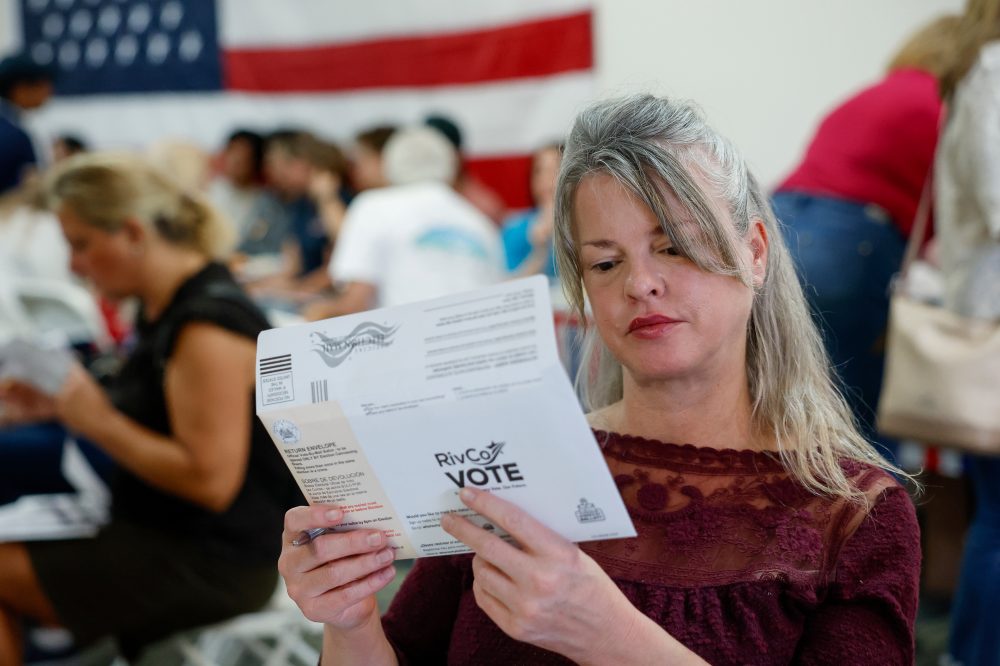
Any registered voter in California may participate in the state primary.
As of April 3, there were about 23.1 million registered voters in California, including about 10.4 million Democrats, about 5.8 million Republicans and about 5.3 million not registered with any party.
About 7.3 million votes were cast in the U.S. Senate primary in 2024, roughly a third of registered voters.
About 89% of vote in the 2024 U.S. Senate primary was cast before primary day.
As of Thursday, about 2.6 million ballots had already been cast in Tuesday’s election.
About four out of every five California counties release some or most of their results from mail voting in the first vote report of the night, usually before any in-person Election Day results are released. Almost half the counties release most or all of their in-person early voting results in the first vote report.
Since mail voting tends to favor Democrats and in-person Election Day voting tends to favor Republicans, the release of mail voting results at the start of the night could result in an early lead for Democratic candidates, while Republican candidates may narrow the gap as more Election Day results are counted.
In the 2024 primaries, the AP first reported results at 11:08 p.m. ET, or eight minutes after polls closed. The last vote update of the night was at 6:01 a.m. ET with about 52% of total votes counted. The count reached 99% of total votes about two weeks later on March 20 at 7:47 p.m. ET.
The Associated Press does not make projections and will declare a winner only when it’s determined there is no scenario that would allow a trailing candidate to close the gap. If a race has not been called, the AP will continue to cover any newsworthy developments, such as candidate concessions or declarations of victory. In doing so, the AP will make clear that it has not yet declared a winner and explain why.
There are no automatic recounts in California. Any registered voter may request and pay for a recount. The AP may declare a winner in a race that is subject to a recount if it can determine the lead is too large for a recount or legal challenge to change the outcome.
As of Tuesday, there will be 14 days until the June 16 special primary in Congressional District 14, 63 days until the Aug. 4 special general election in Congressional District 1, 77 days until the Aug. 18 special general election in Congressional District 14 and 154 days until the Nov. 3 general election.
___
Follow the AP’s coverage of the 2026 election at https://apnews.com/projects/elections-2026/.
Brought to you by www.srnnews.com