

SRN - US News

Trump says Mideast allies have reached outlines of deal to end Iran war, says US to stop new strikes

WASHINGTON (AP) President Donald Trump says he has reached the “parameters” of a deal with Middle East allies aimed at ending the Iran war—while, for now, holding off on fresh U.S. strikes that could further inflame an already dangerous conflict.

In a Saturday evening post on social media, Trump said that the emerging agreement would include the immediate, complete, and total opening of the Strait of Hormuz, alongside an end to what he described as Iran’s nuclear threat. He said he agreed to cancel attacks “for the future benefit of the WORLD” and “likewise, the survival of a successful and prosperous Iran,” adding that the pause would last only so long as Washington could rapidly make a deal.

Trump’s message also indicated Israel would join the U.S. in pushing to finalize the understanding. Iran, meanwhile, offered no immediate public response.

The announcement marks another sudden turn in a war now about five months old—one that has repeatedly shifted in purpose, timing, and intensity. When the United States and Israel began strikes on Feb. 28, the stated objectives included destroying Iran’s missile capabilities, preventing Iran from obtaining a nuclear weapon, and ending support for allied armed groups across the region. But the administration’s timeline and operational targets have come under strain, as the conflict has swung between negotiations and escalation.

In mid-June, an interim agreement halted fighting and was intended to clear the way for a permanent accord. That truce, however, did not hold. Within weeks, Iran resumed attacks on shipping transiting the Strait of Hormuz—one of the world’s most strategically vital waterways and a lifeline for global energy markets. Those disruptions contributed to new instability across the region and increased fears of a widening conflict.

Saturday’s development comes after days of sharply mixed signals from the White House and growing concern among U.S. officials that the conflict could spiral further. The president’s comments to reporters earlier this week suggested he was nearing a decision to resume heavy military strikes. U.S. officials, according to reports, were on edge during the buildup to Trump’s Saturday statement—especially given how quickly the administration has moved from deterrence to escalation, and from escalation back to negotiations.

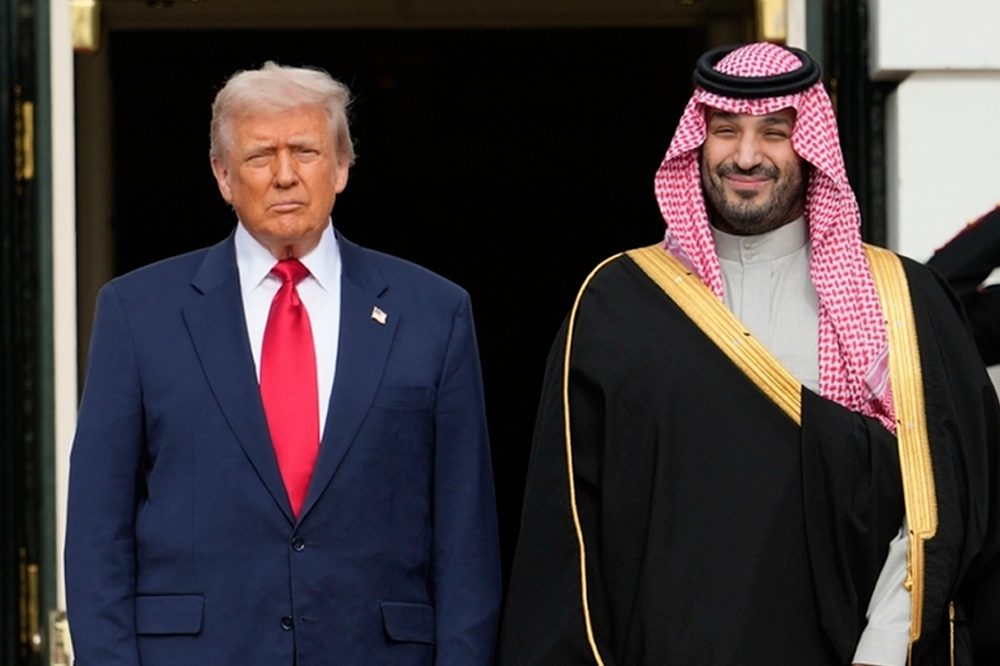
According to a report, the announcement followed Trump’s call with Saudi Crown Prince Mohammed bin Salman earlier Saturday. A person familiar with the conversation said the Saudi leader raised concerns about the possibility of U.S. escalation and sought clarity on what steps Washington might take next. The concern, as described, centered on whether the U.S. might target Iran’s energy infrastructure—such as bridges, power plants, or other sites whose destruction could prompt Tehran to retaliate by striking energy infrastructure across Saudi Arabia and other Gulf countries.

Saudi Arabia has not only been a key regional partner, but also a vocal advocate for an endgame that leads back to negotiations. The kingdom recently joined the U.S. in striking multiple logistics and weapons sites used by Iranian-backed militias in Iraq. Even so, Saudi leaders have continued urging U.S. and Iranian talks aimed at ending the conflict without pushing the region into a broader conflagration.

The diplomatic alignment matters because, some analysts believe deterrence alone cannot solve the problem; it must be paired with leverage, clear objectives, and a disciplined pathway to a durable settlement. Trump’s framing—cancelling attacks contingent on quickly finalizing a deal—fits that approach. Rather than treating military force as an open-ended campaign, the administration is presenting strikes as bargaining leverage, with the stated off-ramp tied to concrete outcomes: open shipping through Hormuz and a verifiable end to Iran’s nuclear ambitions.

Trump’s frustration has been evident. Friday, he told reporters the U.S. just wants to “win” in Iran and that the country will be hit “very hard” until Iran can’t take it anymore. White House press secretary Karoline Leavitt echoed the message, pointing to a sequence of alleged breaches: a memorandum of understanding on a truce signed earlier, followed by attacks on commercial ships and the killing of American soldiers.

Meanwhile, violence in and around the Gulf has continued to underscore the urgency. Kuwait’s military said its forces responded to Iranian drone attacks, with drones striking vital facilities including a government structure in the country’s north. There were no reported casualties. The British Navy reported that a tanker was struck and another explosion occurred near a vessel in the Strait of Hormuz off the coast of Oman, again with no casualties reported. Additional reports described an unknown projectile hitting a vessel near Oman and damage to the engine room. Further incidents included explosions and splashes reported near another tanker in the region.

Taken together, Saturday’s claim of deal parameters is best understood as a pivot from escalation toward outcome-driven bargaining—an attempt to translate U.S. pressure into concrete terms that protect American interests and secure the region’s critical trade corridor.

Whether that pivot holds will depend on whether Iran and its partners accept the deal’s core benchmarks, and whether implementation can begin rapidly enough to prevent the next cycle of attacks—on ships, on infrastructure, and, potentially, on American forces. For now, Trump says the shooting can pause. The question is whether the incentives for a real settlement are strong enough to keep the conflict from flaring again.


Brought to you by www.srnnews.com


Trump says Mideast allies have reached outlines of deal to end Iran war, says US to stop new strikes

WASHINGTON (AP) — President Donald Trump in a Saturday evening social media post claimed that Mideast allies have reached the parameters of a deal to end the Iran war and said that he would hold off on ordering new strikes in the five-month old conflict for now.

Trump added that the emerging deal “would include the Immediate, Complete, and Total OPENING OF THE HORMUZ STRAIT, and an end to Iran’s nuclear threat.”

“Based on this request, I have agreed, for the future benefit of the WORLD and, likewise, the survival of a successful and prosperous Iran, to cancel the attack, subject to being able to rapidly make a DEAL,” Trump said.

He said that Israel has agreed to join the U.S. in the commitment to try to complete the agreement with Iran that would bring about an end to the war.

Iran did not offer any immediate public reaction to Trump’s announcement.

The president’s announcement marked another remarkable turn in the conflict — only a day after he suggested to reporters that he was close to resuming heavy military strikes to force the regime to come to the negotiating table.

The U.S. and Israel attacked Iran on Feb. 28, starting a war that Trump said was aimed at destroying Tehran’s missile capabilities, preventing it from obtaining a nuclear weapon and ending its support for allied armed groups. But the stated goals and timelines for the conflict have repeatedly shifted.

An interim agreement reached in mid-June halted the fighting and was supposed to pave the way for a permanent deal, but it crumbled within weeks as Iran resumed attacks on shipping in the Strait of Hormuz.

Earlier Saturday, Saudi Crown Prince Mohammed bin Salman, the kingdom’s de facto leader, in a phone call with Trump raised concerns about the U.S. potentially escalating the conflict with Iran, according to a person familiar with the leaders’ discussion.

The discussion, which was first reported on by the news outlet Axios, came as Trump weighed whether to carry out new strikes on Iran.

The Saudis, according to the person briefed on the substance of the call but not authorized to comment publicly, are concerned that if the U.S. targets Iran’s energy infrastructure or carries out massive strikes on bridges or power plants that Tehran could respond by carrying out attacks on the kingdom’s and other Gulf countries’ energy infrastructure.

The crown prince during Saturday’s call sought clarity from Trump on what potential new action he’s weighing to take against Iran, the person said.

A White House official, who was not authorized to comment publicly and requested anonymity, confirmed the leaders spoke on Saturday but did not offer any detail about their conversation.

Saudi Arabia earlier this week joined the U.S. in striking multiple logistics and weapons sites used by Iranian-backed militias in Iraq, but has been urging the U.S. and Iran to get back to the negotiating table to find an endgame to the conflict.

The crown prince also dispatched his brother, Saudi Defense Minister Khalid bin Salman, to Washington on Wednesday for separate meetings with Trump and Vice President JD Vance to discuss Iran strategy.

And Trump met with Israeli Prime Minister Benjamin Netanyahu on Tuesday at the White House, their first in-person meeting since launching the war in February. The Israeli leader has urged Trump to continue to prosecute the war against Iran.

The stakes for continued U.S. military action are high for Trump and his party as the conflict, unpopular among many Americans, has jolted the world economy just months before critical midterm elections in November.

The president had vowed to take retaliatory action after the U.S. military thwarted a surprise attack earlier this week by Iran on a U.S. base in Jordan.

Trump on Friday displayed his growing frustration with the conflict, telling reporters that “we just want to win” in Iran and that the U.S. will hit Iran “very hard” until they can’t take it anymore. White House press secretary Karoline Leavitt echoed the president, noting that Tehran last month signed a memorandum of understanding with the U.S. on a truce but then quickly “broke it, shot at commercial ships, and killed American soldiers.”

U.S. officials were on edge ahead of Trump’s Saturday evening statement. And Trump himself in his social media post said that the U.S. military was “locked and loaded” and prepared to display “levels of Military Terror, Strength, and Power not seen since World War II.”

Earlier in the day, the U.S. State Department issued new security alerts for Americans in 10 countries in the region to exercise heightened caution due to the escalating tensions with Iran.

The warnings — covering Bahrain, Israel, Iraq, Jordan, Kuwait, Lebanon, Oman, Qatar, Saudi Arabia and United Arab Emirates — urged U.S. citizens to prepare for the possibility of flight cancellations, temporary airspace closures and other travel disruptions.

Meanwhile, Kuwait’s military said Saturday that its forces responded to drone attacks by Iran.

In a statement, Maj. Gen. Saud Abdulaziz Al-Otaibi, spokesperson for Kuwait’s Defense Ministry, said the drones hit “a number of vital facilities,” including a government structure in the country’s north. He said there were no casualties.

The British Navy said Saturday that a tanker was struck and a separate explosion hit close to a vessel in the Strait of Hormuz off the coast of Oman. No casualties were reported in either incident, it said. The United Kingdom Maritime Trade Organization said an unknown projectile hit the vessel on Friday 11 nautical miles northeast of Lima, Oman. The attack damaged the vessel’s engine room.

The group said that on Saturday a large splash and an explosion were reported close to another tanker while it was sailing 21 nautical miles northwest of Khasab city.


Brought to you by www.srnnews.com


Townhall Top of the Hour News


Local Weather - Sponsored By:

CLINTON WEATHER

Local News

DeWittDN on Facebook